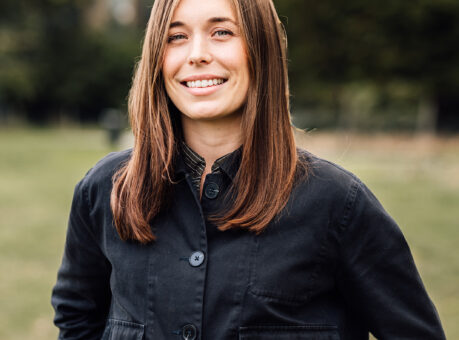
As part of our 15th birthday series, we’re hearing from the people inside Dot Dot Dot who make it all work. Lily, one of our colleagues that looks after our guardians, reflects on empty flats, community WhatsApp groups, and what guardianship could do for our cities.
Why housing and why this job
Lily didn’t come to this role from property. She came from a people-focused background. And for her, that distinction matters.
“Housing’s main purpose should be to support people,” Lily says. In London especially, she sees what happens when it doesn’t: buildings sit empty while rents sky-rocket, regeneration projects stall for years – and the surrounding community pays the price in rising homelessness and declining high streets.
“My role enables me to be part of a solution for all of this. Once you have safe housing, you have a base to start your own business, channel energy into your passions. You can focus on progressing in your career or undertaking further education. Beyond that, guardians actively reach outside of their own spheres. They volunteer with local homeless charities, litter-picking, and keeping local shops alive.”
She continues. “It goes to show that when you take away the anxiety of paying high rental prices and bills every month, people and communities really do flourish.”
Learning on the job
Coming from a people-focused background, learning the ins and outs of the buildings has been the biggest adjustment for Lily.
“Every property in every borough we work in is unique. Even neighbouring flats can have very different layouts, conditions and quirks”,,” she explains.
Part of Lily’s role is helping guardians understand the properties they’re looking after – which means she has to understand them first. “I’ve deep-dived into asbestos reports and I spend a lot of time on site, because that’s where the best learning happens. I’m still getting my head around the different types of boilers. I genuinely learn something every time I step foot in one of Dot Dot Dot’s properties.”
The other steep learning curve for Lily was antisocial behaviour in the areas we work and how to triage reports coming in from guardians. “Every case was unique. But after a lot of discussions with guardians, housing managers and local charities, I managed to establish solid repeatable processes.” Now, she says, these processes work so well, that her biggest challenge on that front is the local pigeons.
Who guardians actually are
One thing Lily’s clear on: the perception of guardianship often bears no resemblance to reality.
“The most common misconception is that guardianship is either crisis housing for vulnerable people, or that guardians are basically legal squatters. Neither of those are even close to the truth.”
In reality, she says, guardians are working professionals and creatives who are proactive, community-minded, and genuinely want to give back. “They’re not just looking for a place to live; they’re looking to become part of a collective and invest their time and skills into a greater cause.”
Lily points out that volunteering is a choice. “People assume guardians are doing it as part of a community service programme. What they don’t realise is that our guardians choose to volunteer for good causes because they genuinely want to.”
The most rewarding part of the job
Nothing connects Lily to Dot Dot Dot’s mission more than picking up a new property.
“You step through a heavy steel security door and find heaps of post that has built up over years. Sometimes there are even people’s personal belongings left behind. It makes you realise that this once lively, inhabited space has just been sitting void, while people on the outside struggle to find somewhere to live in one of the most expensive cities in the world.”
After the checklist is done and the works completed, the property and marketing teams work hard to turn the vacant shell back into a home. “A month or so later, I’ll get an email notifying me that a new guardian has officially moved in. Seeing that once forgotten flat completely transformed and full of life again is honestly the most rewarding part of my job.”
The other moments that stay with her come at the end of a guardianship, not the beginning. Earlier this year, Lily was making calls to give guardians notice on a property being handed back. “One guardian stopped me and said: ‘I just want to say thank you. I’ve been a guardian with you for three years, and I have honestly enjoyed this chapter of my life so much.'”
Reflecting on that, Lily says, “The biggest tell-all sign is that the vast majority of guardians immediately ask to relocate to another Dot Dot Dot property even if it means moving to the opposite side of London.”
What guardianship could be
Lily is clear on what guardianship could look like if more people understood it properly.
“If guardianship was better understood, you would see a shift away from the private rental sector. Working professionals and creatives would be able to save for a mortgage, take a holiday, and pursue further education much quicker.” She sees it rippling outward too: more volunteering, more real social connection, fewer empty buildings costing their owners thousands every month in council tax and security.
But her vision goes further than guardianship alone. “We’re not just living through a housing affordability crisis – we’re experiencing a severe lack of affordable studio spaces, performance venues, green spaces, youth facilities, and cultural venues. Even, dare I say, pubs.” She points to Earl’s Court, where vacant plots have been turned into padel courts and community entertainment spaces while long-term plans are finalised, as a glimpse of what’s possible.
“If we normalised the resourceful, temporary use of vacant space across the board, we could really rejuvenate a lot of lost places across the UK. I really want to see a London that’s far more imaginative and resourceful with its empty spaces.”